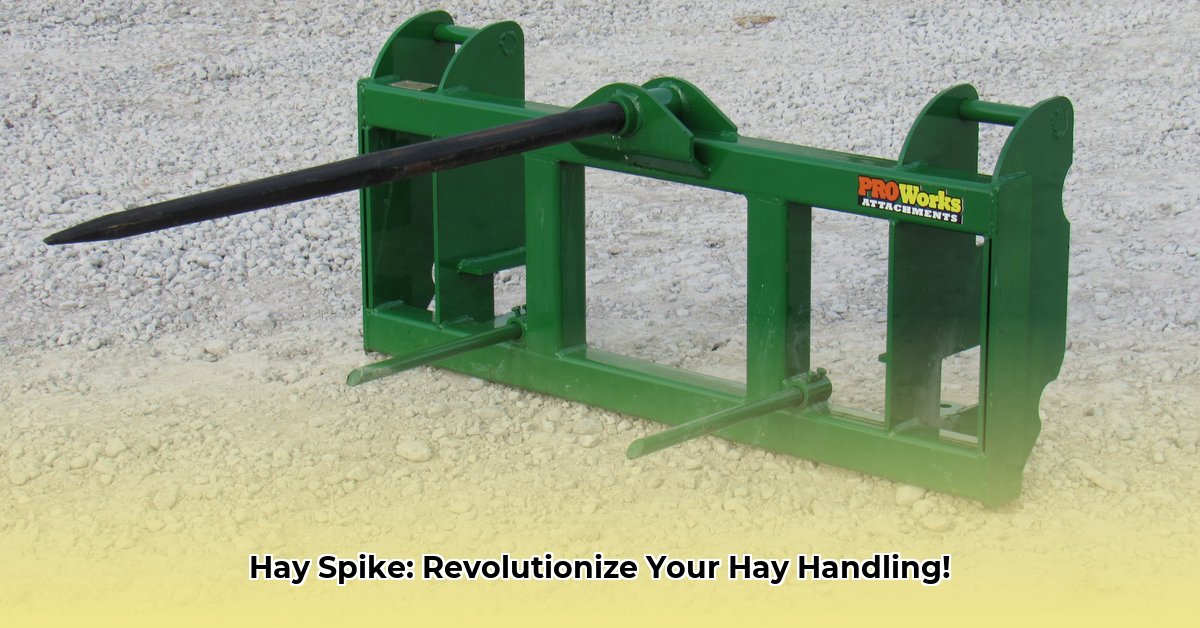
Forget back-breaking labor wrestling massive hay bales! A tractor hay spike revolutionizes hay handling, making the process faster, safer, and significantly less strenuous. This comprehensive guide equips you with the knowledge to select, use, and maintain a hay spike effectively, regardless of your farming experience. For additional hay handling equipment, check out this hay feeder resource.
Understanding Tractor Hay Spikes
A tractor hay spike is essentially a powerful, tractor-mounted fork designed for efficient lifting, transport, and stacking of hay bales. While seemingly simple, selecting the correct spike is crucial for both safety and operational efficiency.
Types of Hay Spike Attachments
Several hay spike types cater to diverse needs and bale sizes. The most common distinctions are based on tine configuration and material.
Single-tine spikes: Ideal for smaller operations or individual bale handling. They are simpler, often more affordable, and suitable for smaller tractors and bales. Think of them as the "pickup truck" of hay spikes.
Multiple-tine spikes: These are heavy-duty workhorses capable of lifting and moving multiple bales simultaneously, drastically increasing efficiency on larger farms. These are the "semi-truck" of hay spikes.
Beyond tine number, consider the materials used. Most spikes use steel, but some utilize stronger, more durable alloys for increased longevity in high-use situations. Tine design also varies; curved tines offer superior bale grip, whereas straighter tines may be preferred in some applications. Ensure compatibility with your tractor's three-point hitch system.
Choosing the Right Hay Spike: A Critical Decision
Selecting the right hay spike isn't a casual choice; it requires careful consideration of several factors:
Tractor Lift Capacity: Absolutely critical! Never exceed your tractor's lifting capacity. Consult your tractor's manual to confirm its weight limits. Overloading is extremely dangerous.
Hay Bale Dimensions and Weight: The spike's capacity must match your bale size and weight. Always err on the side of caution; choose a heavier-duty spike if unsure.
Usage Frequency: Daily use demands a robust, durable spike designed to withstand frequent operation. A higher-quality spike offers longevity and reduces maintenance requirements over time.
Tine Material and Build Quality: While steel is standard, stronger alloys significantly extend lifespan. Thicker tines indicate greater durability. Inspect welds carefully; they should be strong and free of defects.
Tractor Compatibility: Confirm the spike's mounting arrangement is perfectly compatible with your tractor's three-point hitch. A poorly fitting spike is both inefficient and hazardous.
Safe and Effective Hay Spike Operation: A Step-by-Step Guide
Safety is paramount. Always follow these meticulously:
Secure Attachment: Attach the hay spike to your tractor's three-point hitch with precision. Double, even triple-check that all pins and latches are securely engaged. Listen carefully for any loose components; noises indicate potential problems.
Controlled Lifting: Approach the bale methodically, precisely positioning the tines. Lift gradually; avoid abrupt movements. Jerky actions risk bale toppling or spike detachment.
Careful Transport: Drive slowly and smoothly. Avoid sharp turns or sudden braking to maintain bale stability. Be acutely aware of your surroundings, identifying and avoiding potential obstacles.
Precise Placement: Maneuver the bale precisely to its target location. For stacking, ensure a solid base for optimal stability. A spotter can significantly enhance safety during placement.
Safe Detachment: Before detaching the spike, lower the bale gently to the ground. Never detach the spike while the bale remains suspended.
Maintenance and Troubleshooting: Prolonging Hay Spike Lifespan
Regular maintenance is crucial for extending your hay spike's lifespan:
Post-Use Inspection: After every use, inspect the tines for bends or damage. Check welds for cracks and address any issues promptly.
Fastener Checks: Periodically check all bolts and connections for looseness. Tighten any loose fasteners immediately.
Lubrication: Regular lubrication of moving parts will prevent rust and seize-ups. A well-lubricated spike operates more smoothly.
Bent Tines: Minor bends might be correctable; significant damage typically warrants repair or replacement.
Storage: Protect your spike from the elements. Store it in a dry area to prevent rust and corrosion.
Safety Precautions: Prioritize Your Well-Being
Never Overload: This is non-negotiable. Never attempt to lift more than the spike and your tractor are rated for. Overloading risks serious injury and equipment damage.
Situational Awareness: Maintain constant awareness of your surroundings—other equipment, obstacles, people, and livestock. Never operate distracted.
Personal Protective Equipment (PPE): Safety glasses and gloves are minimal safety requirements. Consider hearing protection, particularly during frequent use.
Consult Manuals: Always refer to your tractor and hay spike manuals for thorough safety instructions. These manuals contain essential safety information.
Spotter: Use a spotter for large, heavy bales or stacking operations; a second set of eyes enhances safety.
Conclusion: Efficient and Safe Hay Handling
A hay spike significantly enhances hay handling efficiency and safety. However, its effectiveness depends entirely on safe and responsible operation. By prioritizing safety and following these guidelines, you'll experience the benefits of improved productivity and reduced physical strain for years to come.